A high speed tubular centrifuge is a precision separation machine designed for solid-liquid clarification and liquid-liquid separation. By rotating at speeds exceeding 10,000 RPM, it generates extremely high centrifugal force to remove micron-sized particles and separate liquids with different densities. It is widely used in biotechnology, pharmaceuticals, food processing, edible oil, chemicals, and laboratory applications where high-purity separation is required.
Key Takeaways
High speed tubular centrifuges generate up to 10,000 RPM for high-efficiency separation.
Suitable for removing micron-sized particles and separating immiscible liquids.
Commonly used in pharmaceutical, biotech, edible oil, and chemical industries.
Ideal for low-solid-content materials requiring high purity.
Available in clarification and separation configurations.
Tubular Centrifuge Working Principle
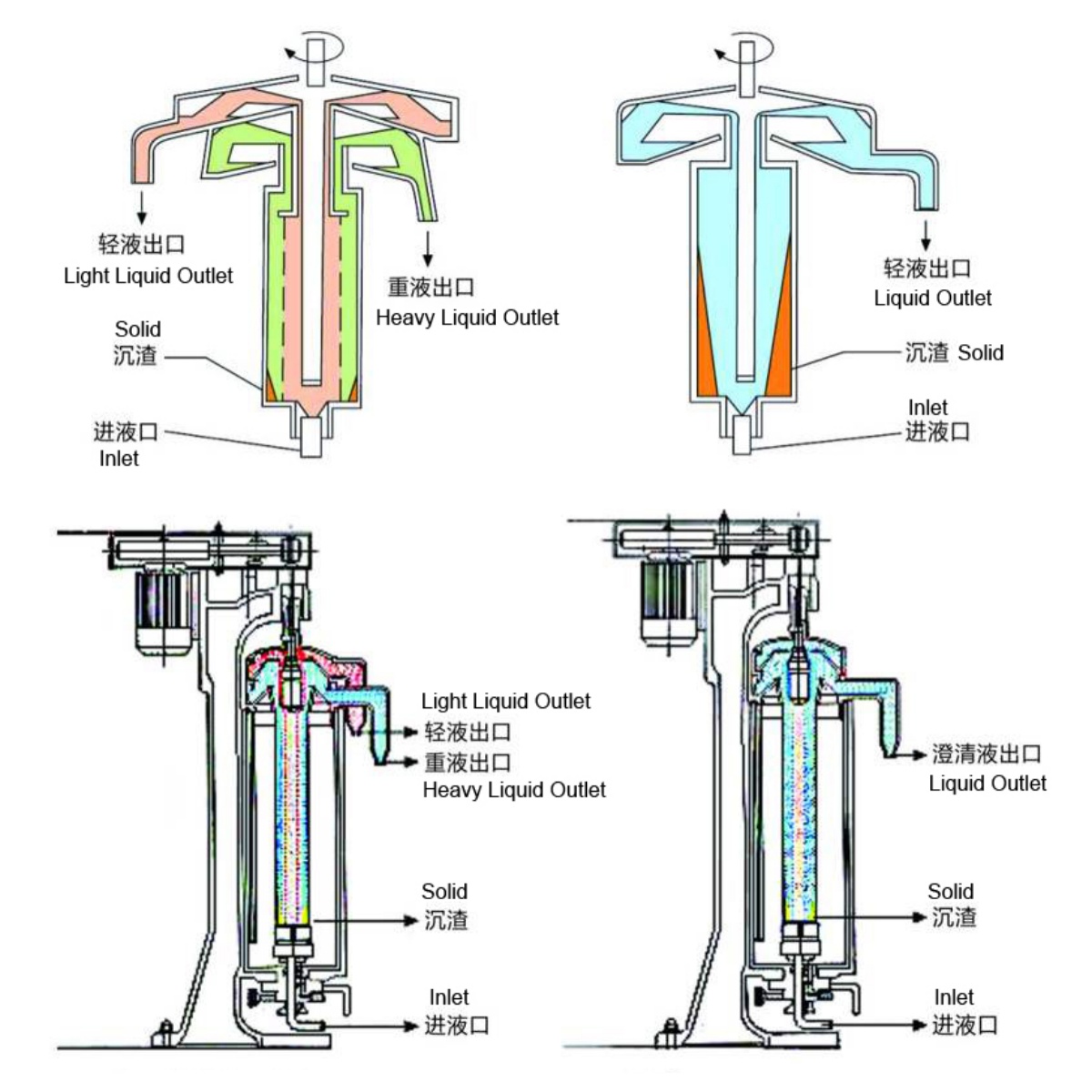
The motor of the tubular centrifuge machine transmits power to the pulley and main shaft on the head through the transmission belt and the pressure pulley, thereby driving the drum to rotate at high speed around its own axis, forming a strong centrifugal force field on the inner wall of the drum. The material is injected into the drum from the bottom feed port, and under the action of strong centrifugal force, the material liquid is forced to move in layers.
Tubular Centrifuge Applications
It is used to separate various difficult-to-separate suspensions, especially suitable for solid-liquid separation of materials with low concentration, fine solid phase particles, and small solid-liquid gravity difference (solid content less than 5%). It is widely used in the clarification and separation of materials such as microbial fermentation broth, health food, pectin, plant extract, and Chinese medicine extract.
Tubular Centrifuge Application characteristics
(1) The biggest feature of this centrifugal separator machine is the large centrifugal force and high separation factor. For most fermentation broths, centrifugation can obtain wet bacteria with low water content and tight and dense; and most centrifugal supernatants can reach the level of clarity and transparency (OD600 is between 0.2-1.0).
(2) The labor intensity is high during the operation of the equipment, and it can only be operated intermittently, and cannot be operated continuously. When the equipment drum is filled with bacterial sludge, it must be shut down, disassembled, removed, cleaned, assembled and then operated. The equipment is suitable for clarifying and separating materials with low solid content (less than 5%). For clarifying and separating materials with high solid content (greater than 5%), other centrifugal equipment is recommended.
(3) The equipment operation requirements are high and the safety risks are relatively large. The operation process must strictly follow the operating procedures. The equipment drum and bearing dynamic balance requirements are high, and the equipment components are relatively complicated to install. Any slight installation error may cause severe vibration of the equipment.
FAQs about Tubular Centrifuge
What is a high speed tubular centrifuge used for?
A high speed tubular centrifuge is used to separate fine solids from liquids or separate two immiscible liquids with different densities. Operating at speeds of up to 20,000 RPM or higher, it generates extremely high centrifugal force, making it ideal for applications where conventional centrifuges cannot efficiently remove micron-sized particles. Typical industries include biotechnology, pharmaceuticals, food and beverage, edible oil, chemicals, and laboratory processing.
What is the difference between a tubular centrifuge and a disc stack centrifuge?
A tubular centrifuge is designed for high-precision clarification and liquid-liquid separation with very low solid content, while a disc stack centrifuge handles larger processing capacities and higher solid loads. Tubular centrifuges produce stronger centrifugal force and better separation of ultra-fine particles, whereas disc stack centrifuges offer continuous solids discharge for high-volume industrial production. The best choice depends on feed characteristics, throughput, and separation requirements.
What industries commonly use tubular centrifuges?
Tubular centrifuges are widely used in industries requiring high-purity liquid separation. Common applications include vaccine production, biological fermentation, blood plasma processing, essential oils, edible oils, beverages, yeast recovery, fine chemicals, and nanomaterial manufacturing. Their ability to remove extremely fine particles makes them particularly suitable for products with strict quality requirements.
What factors should you consider when choosing a tubular centrifuge?
When selecting a tubular centrifuge, consider the material properties, particle size, solid concentration, processing capacity, separation objective (clarification or liquid-liquid separation), viscosity, and cleaning requirements. Choosing the correct bowl type, rotational speed, and material of construction helps maximize separation efficiency, reduce maintenance, and improve long-term operating performance.
Can a tubular centrifuge separate both liquids and solids?
Yes. Depending on the model and application, a tubular centrifuge can perform both solid-liquid clarification and liquid-liquid-solid separation. Clarifying models efficiently remove trace solids from liquids, while separator models are designed to continuously separate two immiscible liquids and simultaneously collect small amounts of solids. This versatility makes tubular centrifuges suitable for a wide range of laboratory, pilot-scale, and industrial processes.
 English
 français
 Español
 русский
 português
 العربية
 Deutsch
 tiếng việt
 한국어
한국어 Türkçe
 Malay
Malay