The freeze dryer (also known as a lyophilizer) removes moisture through sublimation rather than evaporation, making it one of the most effective technologies for preserving heat-sensitive materials. It is widely used in pharmaceuticals, biotechnology, food processing, and laboratory research to extend shelf life, maintain structural integrity, and ensure long-term stability of products.
Freeze Dryer Principle
The freeze dryer principle is based on the phase transition of water directly from solid to vapor under controlled temperature and pressure conditions. The entire process is designed to preserve the material’s original structure while efficiently removing moisture.
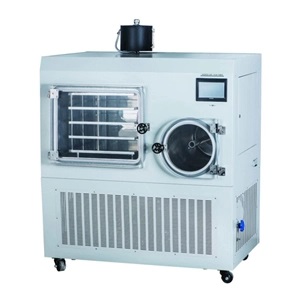
Three Stages of Freeze Drying Cycle
A freeze drying cycle typically consists of three stages: freezing, primary drying (sublimation), and secondary drying (desorption). Each stage plays a critical role in ensuring product quality and stability.
Freezing Stage: Structural Stabilization
The process begins by reducing the product temperature below its triple point, ensuring water transitions into ice without becoming liquid. This step preserves the physical architecture of the material and prevents structural collapse during drying.
Freezing methods vary depending on product sensitivity:
Shelf freezing within the lyophilizer freeze dryer
External freezer pre-freezing
Controlled slow freezing or rapid freezing techniques
Ice crystal size is a key parameter. Slow freezing produces larger crystals that facilitate sublimation channels, improving drying efficiency. However, in biological systems, excessively large crystals may damage cell walls. In such cases, rapid freezing is preferred to maintain cellular integrity. Annealing may also be applied to optimize crystal distribution for complex formulations.
Primary Drying (Sublimation) Stage
During primary drying, pressure is significantly reduced while controlled heat is applied. Under vacuum conditions, ice sublimates directly into vapor without passing through the liquid phase.
The condenser plays a vital role by capturing water vapor and converting it back into ice, thereby protecting the vacuum system and maintaining process stability. Approximately 90–95% of water content is removed during this stage.
Temperature control is critical—excessive heat input can cause product collapse, loss of porosity, or structural deformation.
Secondary Drying (Desorption) Stage
Secondary drying removes bound water molecules that remain after sublimation. By gradually increasing temperature under continued vacuum, residual moisture is reduced to extremely low levels.
At this stage, moisture content is typically reduced to 1–5%, depending on material requirements. The resulting product retains a porous structure, enabling rapid rehydration and long-term stability.
After completion, vacuum conditions are often replaced with inert gas before final sealing to prevent moisture reabsorption.
Advantage of Freeze Drying
Freeze drying offers a unique combination of product stability and structural preservation that is difficult to achieve with conventional drying technologies.
Key advantage freeze dryer has:
Superior structural preservation: Maintains original shape, texture, and biological activity
Low-temperature processing: Ideal for heat-sensitive compounds such as proteins, vaccines, and enzymes
Extended shelf life: Significantly reduces moisture-related degradation and microbial growth
High rehydration efficiency: Porous structure allows rapid and complete reconstitution
Minimal nutrient loss: Retains vitamins, bioactive compounds, and functional properties
Compared with thermal drying methods, freeze drying reduces oxidation and thermal degradation risks, making it the preferred solution in high-value industries such as freeze dryer in pharmaceutical industry and premium food manufacturing.
What’s the Difference Between a Freeze Dryer and a Dehydrator?
Freeze dryers and dehydrators both remove moisture, but they operate through fundamentally different physical principles, resulting in distinct product outcomes.
| Feature | Freeze Dryer (Lyophilizer) | Dehydrator |
|---|
| Drying principle | Sublimation (ice → vapor) | Evaporation (liquid → vapor) |
| Temperature range | Low temperature (often below freezing during primary phase) | Moderate to high heat (typically 40–70°C) |
| Product structure | Porous, lightweight, intact structure | Shrunk, dense, often hardened |
| Nutrient retention | Very high | Moderate, heat-sensitive nutrients may degrade |
| Shelf life | Very long (years in sealed packaging) | Medium to long depending on moisture level |
| Equipment cost | High | Relatively low |
| Processing time | Long (hours to days) | Shorter (hours) |
| Ideal applications | Pharmaceuticals, biologics, premium foods | Fruits, vegetables, herbs, snacks |
Freeze dryers (lyophilizers) are preferred when product integrity, bioactivity, or premium quality is essential. Dehydrators are more suitable for cost-efficient bulk drying where texture changes are acceptable.
Common Operational Challenges in Freeze Drying
Effective freeze drying requires precise control across all stages. Improper settings can lead to product failure or reduced efficiency.
Key issues include:
Excessive heating leading to product collapse or melting
Condenser overload due to excessive vapor load
Insufficient freezing causing structural instability
Steam choking when vapor flow exceeds system capacity
Undersized condenser or excessive batch loading reducing efficiency
Process optimization is essential to ensure consistent results, particularly in large-scale production environments.
Freeze drying technology continues to evolve with improvements in energy efficiency, automation, and process control systems. Modern equipment now supports broader industrial applications, from laboratory-scale research to large-scale manufacturing, offering highly customizable configurations to meet diverse production requirements.
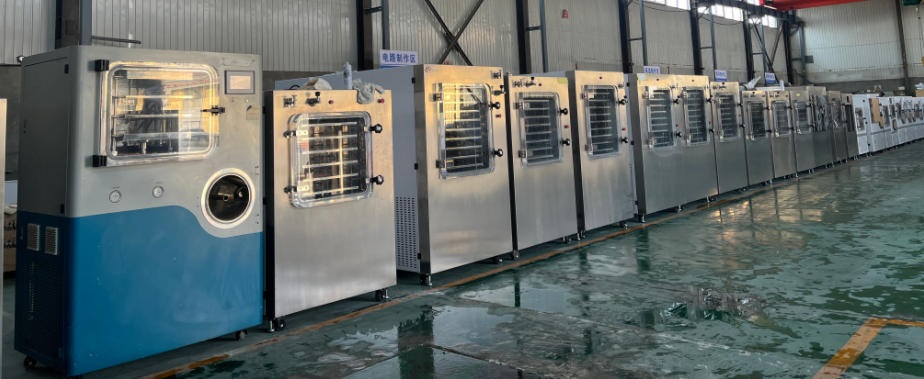
As one of the professional freeze dryers manufacturers, Sinotech Machinery focuses on delivering advanced lyophilization equipment designed for high performance, stability, and precision control. With continuous innovation in system integration and process optimization, Sinotech Machinery provides solutions that support pharmaceutical, biotechnology, and food processing industries, ensuring reliable freeze-drying outcomes across different production scales.
FAQs about Freeze Dryers
What is the use of a freeze dryer?
A freeze dryer is used to preserve food, pharmaceuticals, and biological materials by removing moisture through sublimation. It helps maintain original structure, flavor, and nutritional or biological activity while significantly extending shelf life.
Is freeze-dried food healthy?
Freeze-dried food is generally considered healthy because it retains most nutrients, including vitamins, minerals, and natural flavors, due to the low-temperature dehydration process.
How long will food last in a freeze dryer?
Properly freeze-dried and well-sealed food can last approximately 5 to 25 years. Shelf life depends on factors such as residual moisture, packaging quality, storage temperature, and the type of food being preserved.
 English
 français
 Español
 русский
 português
 العربية
 Deutsch
 tiếng việt
 한국어
한국어 Türkçe
 Malay
Malay